
Blog · Launch notes
I Launched a Chrome Extension. Here’s What I Learned About Getting My First 100 Users.
Two months ago, I published my Chrome extension, Popcorn.
Today, it has crossed 100 weekly active users.
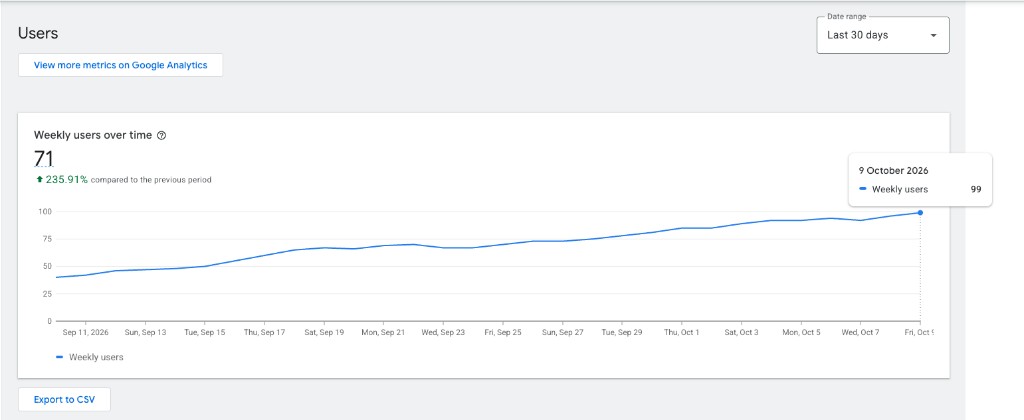
That might not sound like a lot compared to products that launch to thousands of users overnight. But for a solo developer building a product from scratch, seeing people discover, install, and continue using something I built is incredibly rewarding.
Popcorn is a free Chrome extension that displays IMDb and Rotten Tomatoes ratings directly on streaming platforms like Netflix, Prime Video, Disney+ Hotstar, and several others. The idea is simple: help people decide what to watch without having to open another tab and search for ratings.
Building the extension was one part of the journey. Getting people to discover it was another.
Over the last two months, I experimented with sharing it with friends, promoting it on Reddit, trying different communities, experimenting with ads, and creating a demo video.
Here are some lessons I've learned along the way.
01 Build a product that people actually want to use
This sounds obvious, but it's easy to get caught up in building features and forget why someone would use your product in the first place.
With Popcorn, the problem was something I experienced myself.
I'd browse Netflix, find something interesting, open IMDb in another tab, check its rating, return to Netflix, and repeat the process for the next title.
It was a small inconvenience, but one that happened often enough to become annoying.
Popcorn eliminates that extra step by showing ratings directly on streaming posters.
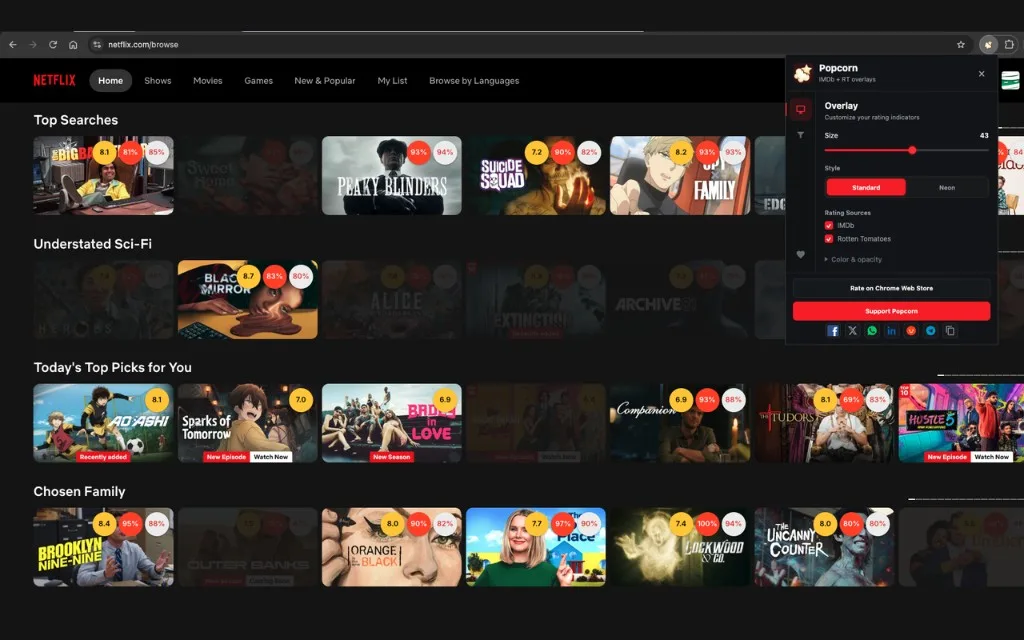
The important part wasn't just displaying ratings. It was making sure the extension felt lightweight, worked where users expected it to, and didn't get in the way of browsing.
Over time, I also added customisable icons and filters so users could tailor the experience to their preferences.
The lesson: solve a specific problem well before trying to build everything.
Marketing can get people to install your product once. But the product experience determines whether they find it useful enough to keep using it.
If your product doesn't deliver on its promise, getting more installs won't solve the underlying problem.
02 Start with friends and family
My first step was straightforward: I shared Popcorn with friends and family.
This brought in roughly 20 users.
It's tempting to dismiss this approach because friends and family aren't necessarily your target audience. But it's a useful starting point.
You get your first installations, discover whether the product works on different setups, and start collecting feedback from actual users.
You also get something that's difficult to manufacture when you're starting from zero: a little confidence that someone other than you is willing to try what you've built.
However, your personal network has a limit. Eventually, you need to reach people who have the problem you're solving but don't know you personally.
That's where marketing becomes important.
03 Reddit became my first meaningful distribution channel
After the initial push, I started experimenting with Reddit.
Instead of posting everywhere at once, I tried sharing Popcorn in communities where people were already discussing streaming platforms, movies, and related tools.
One of my posts in r/netflixindia received approximately 4.1K views.
A repost later reached around 16K views.
For a small, independently built Chrome extension, that was a meaningful amount of exposure without needing a large marketing budget.
It also taught me something important: the same product can receive very different levels of attention depending on where and how you share it.
A post in a relevant community can reach people who immediately understand the problem Popcorn solves. A generic promotional post elsewhere might receive little attention, even if the product is identical.
But Reddit wasn't a straightforward success story.
Eventually, my posts started getting filtered or removed in some communities. I had to stop repeatedly promoting the extension and rethink my approach.
I'm now working on participating more genuinely in Reddit communities, building a reputation by contributing useful comments, and understanding each subreddit's rules before sharing anything promotional.
The lesson: don't treat communities as free advertising space. Become a genuine participant first.
Read the rules, contribute to discussions, answer questions where you can, and share your product only when it's relevant and permitted.
Karma can help establish credibility, but it isn't a substitute for following community guidelines.
Also, don't assume that a post that works in one subreddit will work in another. Every community has its own expectations, culture, and tolerance for self-promotion.
04 Create different campaigns for different platforms
One mistake I could have made was writing a single promotional message and copying it everywhere.
Different platforms have different audiences, and people use them for different reasons.
For Popcorn, I started thinking about distribution in terms of communities rather than just social networks.
For example:
- Netflix-focused communities: Explain how ratings make browsing and choosing what to watch easier.
- Chrome extension communities: Focus on what the extension does, its features, and the problem it solves.
- Side-project communities: Share the building journey, the decisions behind the product, and the lessons learned.
- Developer communities: Discuss the technical challenges, implementation, and what I learned while building it.
- Short-form video platforms: Demonstrate the extension visually instead of relying on a paragraph to explain it.
The product remains the same, but the story changes depending on who's reading it.
Someone browsing Netflix doesn't necessarily care about the engineering behind the extension. A developer might be much more interested in how it was built.
This doesn't mean creating a completely different product pitch for every platform. It means highlighting the part that matters most to that particular audience.
I've also learned that distribution takes experimentation. You won't know which community or format works best until you try it.
05 Find your audience before spending money on ads
I also started experimenting with Reddit ads.
Paid promotion can help you reach more people, but I've realised that finding the right audience is at least as important as getting more impressions.
If you're building a product for a specific group of people, start by identifying where those people already spend their time.
For Popcorn, that meant exploring communities such as r/netflixindia, r/netflixUK, r/NetflixBestOf, r/chrome_extensions, and r/SideProject.
These communities aren't interchangeable, and each has its own posting rules. But they represent different audiences that might find the extension useful for different reasons.
The broader point is that advertising isn't just about buying visibility. You need to understand who you're reaching, why they'd care, and what would convince them to try the product.
If you can reach the right people organically, you can learn which messages resonate before committing more money to paid campaigns.
I'm still experimenting with ads, so I don't have a definitive conclusion about what works best yet. But I would prioritise understanding the audience and testing the message rather than simply increasing the advertising budget.
06 A good demo video can explain more than a long post
I also created a demo video for Popcorn with the help of Claude Code.
The idea was simple: instead of asking people to imagine how the extension works, show them.
A short demonstration can communicate the value of a product much faster than a lengthy description.
For Popcorn, the core interaction is visual. You browse a streaming catalogue, see ratings directly on posters, and decide what to watch.
That experience is much easier to understand when someone sees it in action.
This is especially useful for browser extensions, developer tools, and other products where the interface is a big part of the value proposition.
A demo doesn't need to be a highly produced commercial. It needs to show the problem, demonstrate the solution, and make the benefit obvious.
Once you have a good demo, you can adapt it for different platforms, use it in promotional posts, and make it easier for potential users to understand your product before installing it.
07 Organic growth is a signal worth paying attention to
One of the most encouraging things happened when I stopped actively promoting Popcorn.
I haven't posted anything about it on social platforms for the past week or two, yet I'm still getting approximately 1–4 new users every day.
That's not explosive growth, but it's encouraging.
It suggests that people are still discovering the extension even when I'm not actively sending traffic its way.
That discovery might come from search, the Chrome Web Store, people sharing the extension, or other sources. I haven't established exactly how much each channel contributes yet.
But it raises an interesting question: what happens if you keep improving the product while also investing in distribution?
Organic growth is particularly valuable because it gives you a reason to look beyond individual promotional spikes. A post might bring thousands of views in a day, but what happens after that attention fades?
Are people installing the product? Are they using it again? Are they recommending it to others?
Those are the questions that matter more over the long term.
I want to keep understanding where Popcorn's organic users come from and which channels bring people who actually find the extension useful.
08 Measure more than views and installations
It's easy to get excited when a post reaches thousands of people. I've certainly found the Reddit numbers encouraging.
But views aren't the same as users, and installations aren't the same as retention.
I'd separate the metrics into three categories:
Reach: How many people saw your post, video, or advertisement?
Acquisition: How many people visited your listing and installed your product?
Retention: How many of those users returned and continued using it?
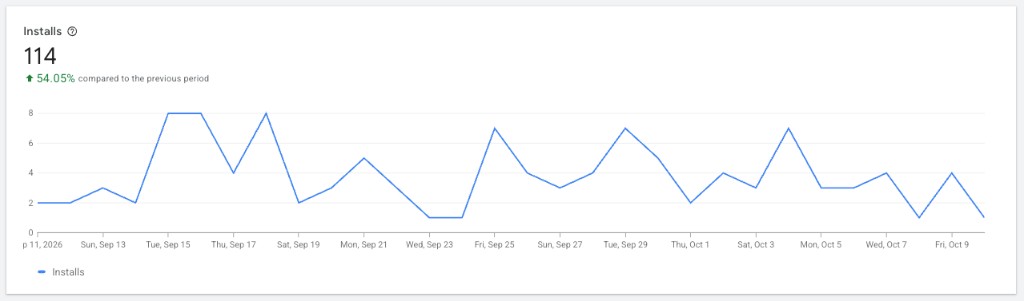
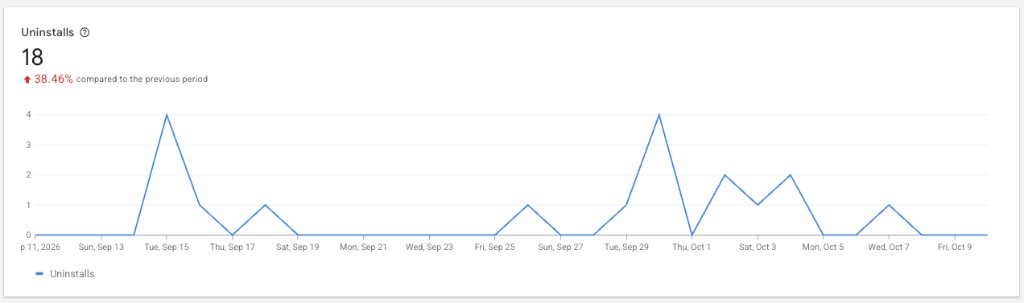
These metrics tell you different things.
If a post gets plenty of views but few installations, the message might not be compelling enough, or the audience might not be a good fit.
If people install the extension but don't return, the issue might be the product experience, the usefulness of the features, or the frequency with which the problem occurs.
If people continue using it and new users keep arriving, you have a much stronger signal to build on.
You don't need an elaborate analytics setup from day one. Even a simple understanding of these stages can help you make better decisions about where to spend your time.
09 Analytics: Stop Guessing Where Your Users Come From
One of the most important things I've learned while launching Popcorn is the importance of analytics.
When you're starting out, it's easy to focus on vanity metrics. Your Reddit post gets thousands of views, your Chrome Web Store listing gets more impressions, and you see a few new installations. It feels like progress, and it is — but you still don't know the complete story.
Which platform brought those users in? Which campaign actually converted people into installs? Are those users still using your product a week later?
Without analytics, you're making marketing decisions based on assumptions.
Google Chrome Web Store Developer Dashboard
The Chrome Web Store Developer Dashboard is one of the first places I'd recommend checking regularly after publishing an extension.
It provides useful graphs and statistics that help you understand how your listing is performing over time. Depending on the available reports, you can track metrics such as impressions, listing visits, and user or installation trends.
These graphs help you identify patterns.
For example, if you share Popcorn on Reddit and notice a spike in listing traffic around the same time, that's a useful signal. If traffic continues even after you've stopped promoting the extension, that suggests there may be ongoing discovery happening through other channels.
You can also observe whether your listing's performance changes over time rather than judging the launch based on a single day's numbers.
The important thing is to check these metrics regularly and correlate changes with what you've been doing.
Don't just look at the numbers. Look for the events that explain the numbers.
Use campaign-specific URLs
This is something I'd strongly recommend doing from the beginning.
Suppose you share your extension on Reddit, post it on a developer community, publish a LinkedIn post, and run an advertisement.
If you use the same URL everywhere, it becomes difficult to distinguish the traffic generated by each campaign, unless you have other attribution data available.
Instead, create a separate URL for each campaign using UTM parameters.
For example:
Reddit — Netflix India
?utm_source=reddit&utm_medium=organic_social&utm_campaign=launch&utm_content=netflixindiaReddit — Chrome extensions
?utm_source=reddit&utm_medium=organic_social&utm_campaign=launch&utm_content=chrome_extensionsLinkedIn post
?utm_source=linkedin&utm_medium=organic_social&utm_campaign=launchReddit ads
?utm_source=reddit&utm_medium=paid_social&utm_campaign=launchAppend these parameters to a landing page or other URL you control, or to a destination that supports and preserves them. If you're linking directly to the Chrome Web Store, verify that the store's reporting supports the attribution you need; don't assume that UTM parameters alone will give you complete install-level attribution.
If you have a landing page for Popcorn, you can use Google Analytics to see where visitors came from, which campaigns brought them there, and how they behaved on the site.
This makes it much easier to compare campaigns instead of relying on impressions or engagement alone.
Why this matters
Imagine that you publish in three different communities:
| Campaign | Views | Listing visits | Installs |
|---|---|---|---|
| Netflix India | 4,100 | 200 | 40 |
| Chrome extensions | 1,500 | 180 | 55 |
| Side projects | 3,000 | 90 | 10 |
Netflix India generated the most views, but the Chrome extensions community generated the most installs despite having fewer views.
Without campaign-level measurement, you might keep investing your time in the community with the largest reach rather than the one that generates the most users.
This is why I think tracking campaign URLs is such a small but valuable habit. It takes very little effort to set up, and it can help you make much better decisions later.
Track the entire funnel, not just traffic
Ideally, you want to understand the journey from someone discovering your product to becoming a regular user:
Campaign Landing page Chrome Web Store listing Installation Active usage
You may not be able to measure every step perfectly, particularly when users move between websites and the Chrome Web Store. That's okay. Start with the data you can reliably collect and gradually improve your tracking.
For a Chrome extension, I'd pay attention to three things:
- Acquisition: Which campaigns and sources bring people to your product?
- Conversion: How many visitors or listing viewers turn into installations, where measurable?
- Retention: How many users continue using the extension over time?
The last one is particularly important. A campaign that brings in 100 installs but almost no returning users might be less valuable than one that brings in 30 users who continue using the product.
Analytics isn't just about reporting what happened. It's about helping you decide what to do next.
When you're building a side project, your time is limited. Good analytics helps you spend that time on the channels and improvements that actually matter.
10 Launching is not a one-time event
Before building Popcorn, I thought of launching as a milestone: finish the product, publish it, and announce it to the world.
Now I think of it differently.
Publishing the extension was only the beginning. After that came discovering which communities cared about it, experimenting with different messages, creating a demo, understanding moderation rules, and observing how users behaved.
Some experiments worked better than others. Some brought attention without necessarily translating into long-term usage. Others are still ongoing.
That's normal.
You don't need to have a perfect marketing strategy before launching. In fact, launching is one of the best ways to start learning what your marketing strategy should be.
Start small, test different channels, pay attention to the results, and keep improving.
Most importantly, don't spend all your time acquiring new users at the expense of the product itself.
The two need to grow together.
— Final thoughts
Two months after publishing Popcorn, crossing 100 weekly active users feels like a small but meaningful milestone.
I'm still learning how to market the product, which communities are the best fit, and how to turn occasional discovery into sustainable growth.
If there's one thing I'd tell someone preparing to launch their first Chrome extension or side project, it would be this:
Build something genuinely useful, but don't expect people to discover it just because you've published it.
Spend time finding your audience. Experiment with distribution. Adapt your message to each platform. Create a demo that makes your product's value immediately obvious. And pay attention to whether people stick around after the initial excitement.
You don't need to go viral to make progress. You need to keep learning what works.
For me, Popcorn is still a work in progress, both as a product and as a business experiment.
And I'm looking forward to seeing where it goes next.